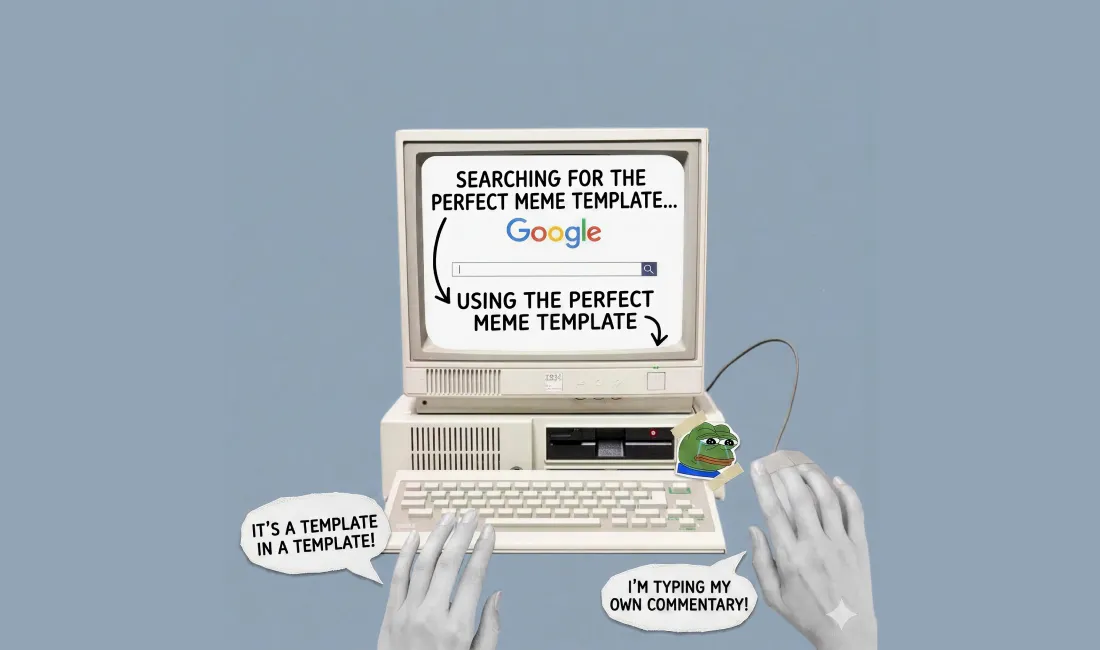
To meme or not to meme – How memes are transforming news consumption
In today’s digital world, memes have grown far beyond their roots as funny internet jokes. They’ve become a unique way for people to engage with news, opinions, and current events. For many, especially younger generations, memes now serve as a main source of information, distilling complicated topics into a quick, engaging format. While this shift has made news more accessible and entertaining, it also raises questions about how memes influence our understanding of the world and the accuracy of their messages.
One of the biggest reasons memes change how we consume news is their simplicity. Reading long articles or watching in-depth news reports can feel overwhelming or time-consuming, especially for people not deeply interested in traditional media. Memes cut through all that by summarising events in a single image or short video, usually with a touch of humour or exaggeration. A clever caption or relatable context can make even complex global issues feel understandable and shareable in seconds. For young people scrolling through TikTok, Instagram, or X (formerly Twitter), memes are often their first, and sometimes only, exposure to the news.
This rise of memes as news comes with a trade-off, though. While they make information easier to access, they blur the line between fact and entertainment. Memes thrive on humour, satire, and oversimplification, which can distort the reality of serious issues. Memes often simplify complex topics by highlighting specific aspects or dramatising certain details, making the subject more engaging and memorable. While this can make the topic memorable, it risks leaving out important context or nuance. People often walk away entertained but not necessarily better informed.
At the same time, memes have a unique power to spread ideas quickly. When something big happens, like an election, a protest, or a controversy, memes explode across social media. Their viral nature ensures that even people who aren’t actively following the news can’t avoid seeing snippets of major events. But memes don’t just spread information, they also spark conversation. People remix and reinterpret memes, adding their perspectives or humour, creating a kind of participatory dialogue around news stories. In this way, memes don’t just inform, they engage and involve people in a way traditional news rarely can.
More than entertainment, memes have also become a tool for activism. A well-crafted meme can distil a complicated issue into something emotionally powerful, motivating people to share it and take action. Memes make these topics feel personal and urgent, often in ways traditional media struggles to achieve.
Still, not everything about meme-driven news is positive. One of the biggest problems is the spread of misinformation. Accuracy sometimes takes a backseat because memes are designed to be funny, shocking, or shareable. A meme might exaggerate facts or leave out key details, and by the time it goes viral, its message can shape public opinion before anyone checks if it’s true. This can make it harder to separate legitimate news from satire or falsehoods.
Memes have undeniably changed how we consume news, for better and worse. They make information quick, accessible, and engaging, helping more people stay connected to what’s happening in the world. However, their simplicity and humour can oversimplify complex issues or spread misleading information. As memes continue to dominate online culture, it’s more important than ever to think critically about the information they deliver.
In the end, memes are more than just internet jokes. They reflect how our world communicates: fast, creative, and sometimes flawed. They have the power to inform, entertain, and even unite people, but they challenge us to be more thoughtful about where we get our news and how we interpret it. As the line between humour and headlines keeps blurring, one thing is clear: memes are shaping the future of how we understand the world.